
Neuroimaging
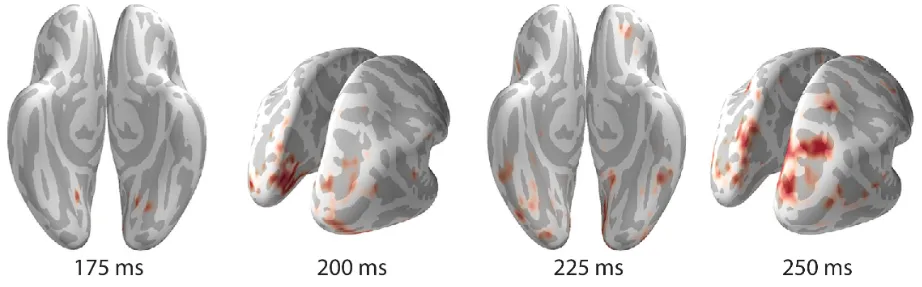
Our group uses neuroimaging to undercover the neural origins of behavior, particularly within the context of rapid decision making. For example we use single-trial analysis of high-density EEG to undercover the components of object recognition during rapid serial visual presentation. We have also integrated this approach with simulatenously collected fMRI, correlating the trial-to-trial variability of the high-spatial resolution hemodynamic response with that of the high-temporal resolution EEG.
Brain Computer Interfaces
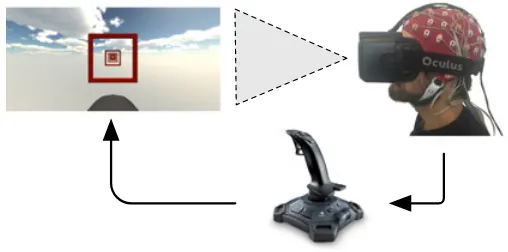
We are developing brain computer interfaces (BCIs) which utilize neural correlates of attentional shift, arousal, engagment and recognition as labels for exemplar based machine learning systems. Our first system, called cortically-coupled computer vision (C3Vision), uses real-time processing of the EEG, machine learning, and graph-based semi-supervised computer vision to construct an image triage system for Image Analysts. Our current work is focused on developing “opportunistic BCI” platforms where we leverage naturally evoked neural responses to events objects in real world environments.
Machine Learning
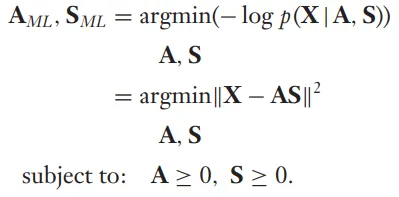
At the core of much of our research is machine learning (ML) for predicting, classifying and fusing multiple neural and non-neural data streams to better identify the cortical and subcortical networks underlying rapid decision making. Our methods employ a number of recent advances in ML, including sparse feature spaces, kernel machines, deep learing and transductive learning.
Computational Network Models
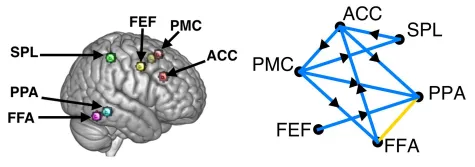
We use computational modeling to link our macroscopic observations/findings from our human neuroimaging work to mesoscopic scale neuronal population activity and circuity. For example we have developed large scale spiking neuron models of sensory cortices, such as V1, and used them as a substrate for investigate representations for perceptual decision making. We find that, already at the level of early sensory cortices, a reliable representation exists in the population neurodynamics and can belinearly decoded and matched to human psychophysics data.